


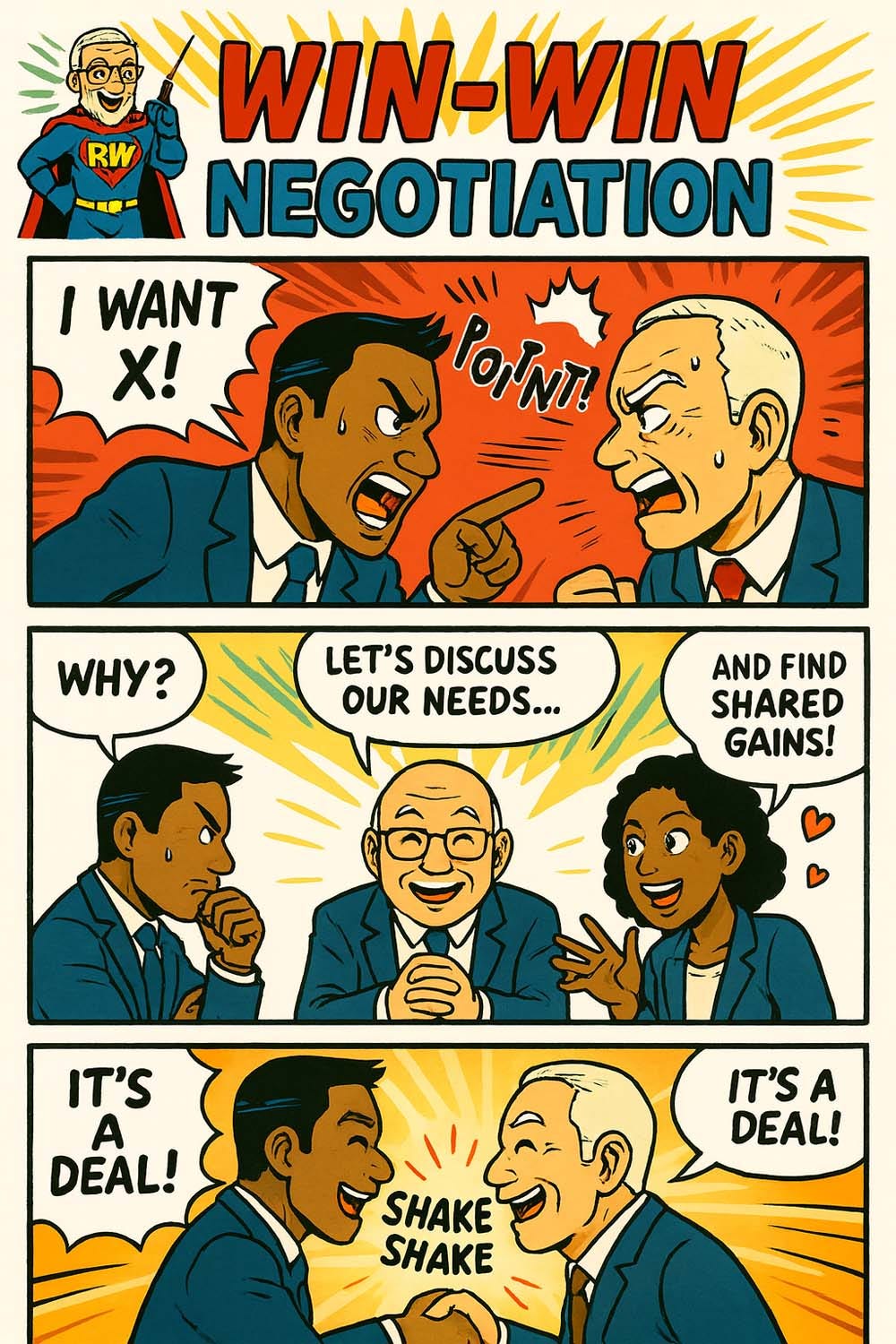
Many people think negotiation means one side wins and the other loses. But the best negotiators aim for win–win outcomes — where both sides feel satisfied and respected.
A win–win negotiation isn’t about being soft or giving in. It’s about finding solutions that meet the real interests of everyone involved.
Instead of arguing over fixed positions (“I want X”), both sides explore why they want it (“I need X because…”). This opens space for creativity and trust.
For example:
In a supplier deal, the buyer wants lower costs; the supplier wants stable revenue. A win–win might be a longer contract with gradual price reductions.
In a team setting, two departments compete for budget. A win–win might be sharing resources to achieve both goals more efficiently.
Key principles of win–win negotiation:
Focus on interests, not positions. Ask “why?” to uncover motivations.
Look for mutual gains. Be creative in finding shared value.
Use objective criteria. Base decisions on facts, not pressure.
Communicate openly and respectfully. Trust builds better deals.
Win–win thinking strengthens relationships, protects reputations, and turns negotiation from a battle into a partnership.
Reference: Getting to Yes: Negotiating an agreement without giving in, Roger Fisher and William Ury.