


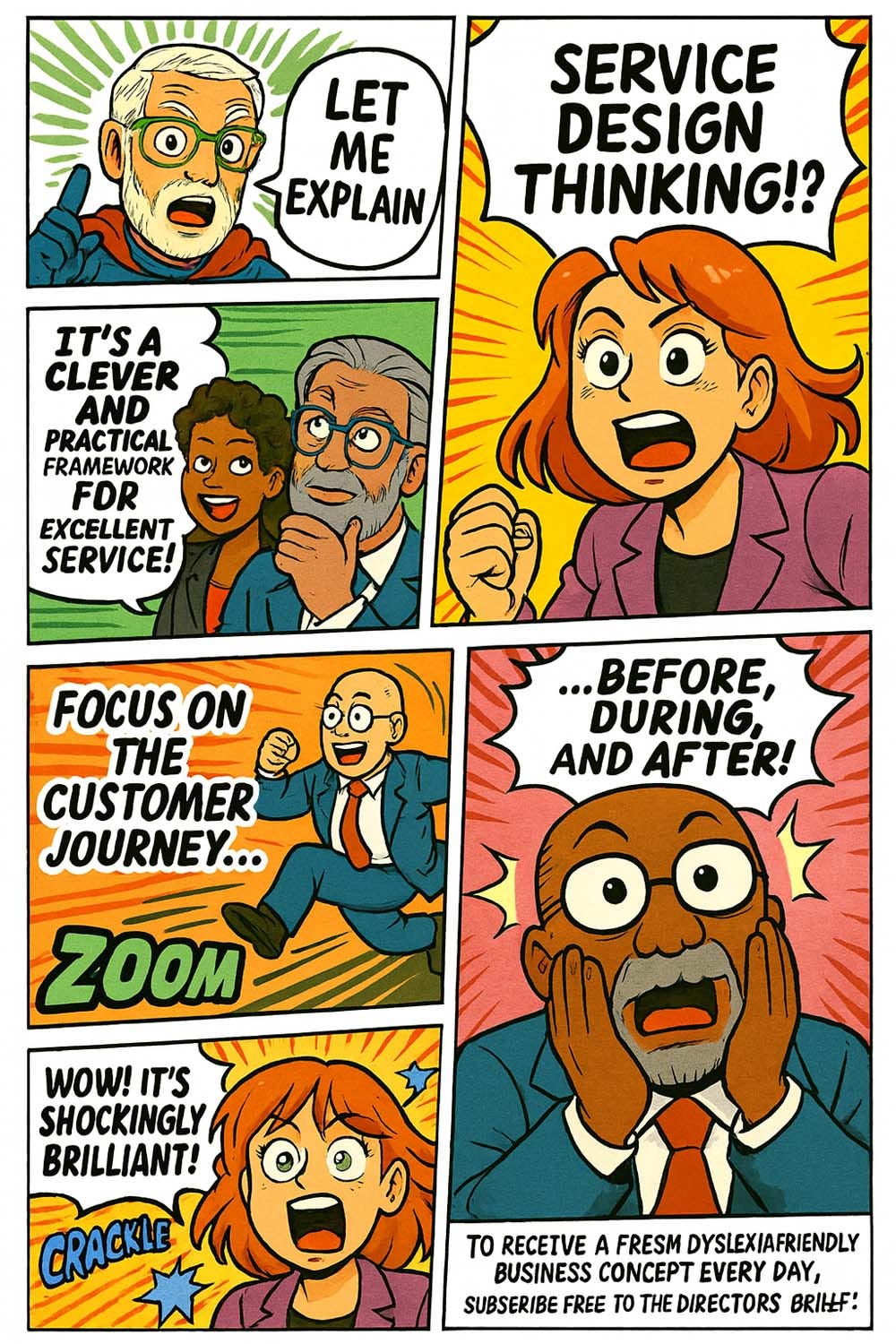
Service Design Thinking is a structured way to design or improve a service so it’s effective for the customer and efficient for the business. It focuses on how people experience the service from start to finish — not just what happens at each step.
At its heart, Service Design Thinking combines empathy, creativity, and practical problem-solving. It looks at the full journey — before, during, and after the service — to make sure every part connects smoothly.
The Five Key Principles:
User-centred – Design from the customer’s point of view, not internal assumptions.
Co-creative – Involve staff, customers, and stakeholders early in the process.
Evidence-based – Use real data, feedback, and observation to guide decisions.
Holistic – Look at the full system, including front-stage (customer-facing) and back-stage (behind-the-scenes) processes.
Iterative – Test ideas early, learn quickly, and keep improving.
Why it matters:
Improves customer satisfaction and loyalty.
Reduces wasted time, effort, and costs.
Aligns teams around a shared view of what “good service” means.
Service Design Thinking turns services from “good enough” into “great experiences” by focusing on what truly matters to the people using them.