


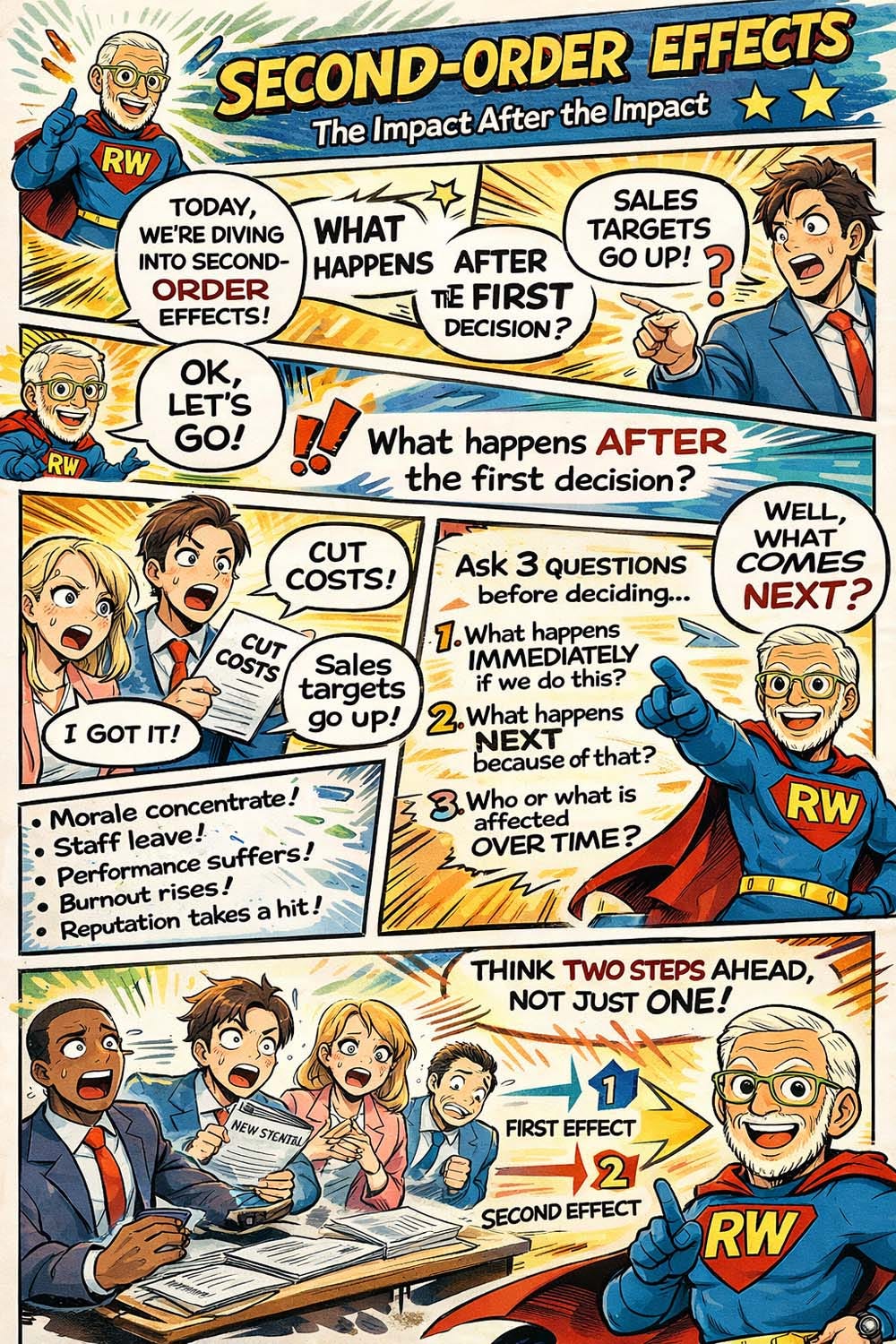
Second-order effects are the knock-on consequences of a decision.
They are not the first, obvious result.
They are what happens next.
Many business decisions fail not because the first effect was wrong,
but because the second effect was ignored.
First-order effects: the obvious result
This is the direct and immediate outcome.
Examples:
Cut costs → spending goes down
Launch a new system → process becomes faster
Increase targets → short-term sales rise
These are easy to see.
Most decisions stop here.
Second-order effects: what follows
This is what happens because of the first effect.
Examples:
Cut costs → morale drops → staff leave → performance suffers
Faster system → less human checking → more errors appear
Higher targets → stress increases → burnout and absenteeism rise
Second-order effects often appear weeks or months later.
Why second-order thinking matters
Leaders are paid to think beyond today.
Ignoring second-order effects can lead to:
Hidden risks
Rework and firefighting
Damage to culture, trust, or reputation
Good leaders ask:
“What will this decision set in motion?”
A simple thinking habit
Before deciding, pause and ask three questions:
What happens immediately if we do this?
What happens next because of that?
Who or what is affected over time?
Write the answers down.
If the second line worries you, rethink the decision.
In short
First-order effects are direct
Second-order effects are consequences of consequences
Strong leadership looks two steps ahead
Better decisions come from thinking past the obvious.