


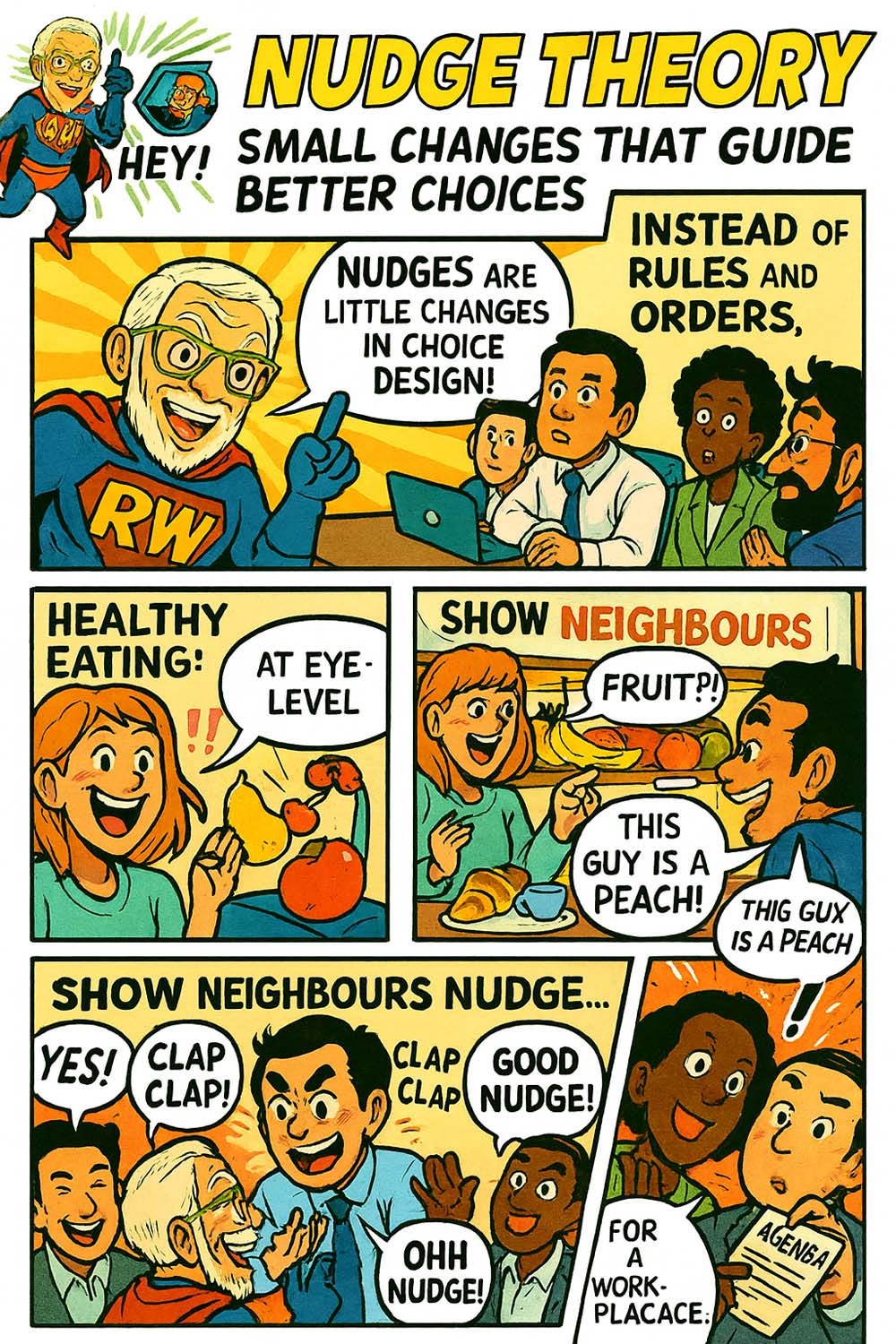
Nudge Theory is about influencing behaviour in a gentle way, without forcing people. Instead of rules or orders, it uses small design changes in choices and environments to “nudge” people towards better decisions.
The idea is simple: people often make quick, automatic choices. Nudges work with human psychology to guide those choices, while still leaving freedom to decide.
Examples of nudges
Healthy eating: Putting fruit at eye level in a café makes it more likely people will choose it.
Energy saving: Showing households how their energy use compares with neighbours encourages them to reduce consumption.
Workplace safety: Clear floor markings guide people where to walk safely without needing strict rules.
Meetings: Sending a one-line agenda before a meeting nudges people to stay on topic.
Why this matters in business
Nudges improve outcomes without adding heavy controls.
They can make policies easier to accept because people keep their freedom of choice.
They often cost less than new systems or strict enforcement.
How to apply Nudge Theory
Make the good option easier – Reduce friction for positive choices.
Use defaults – People often stick with the default, so make it the best option.
Show social proof – People are influenced by what others do.
Give timely prompts – Reminders at the right moment are more effective.
Nudge Theory helps leaders guide behaviour in smart, respectful ways – improving decision-making across teams and organisations.